Lonely Planet Watched Its Market Disappear. Gus Balbontin Was in the Building.
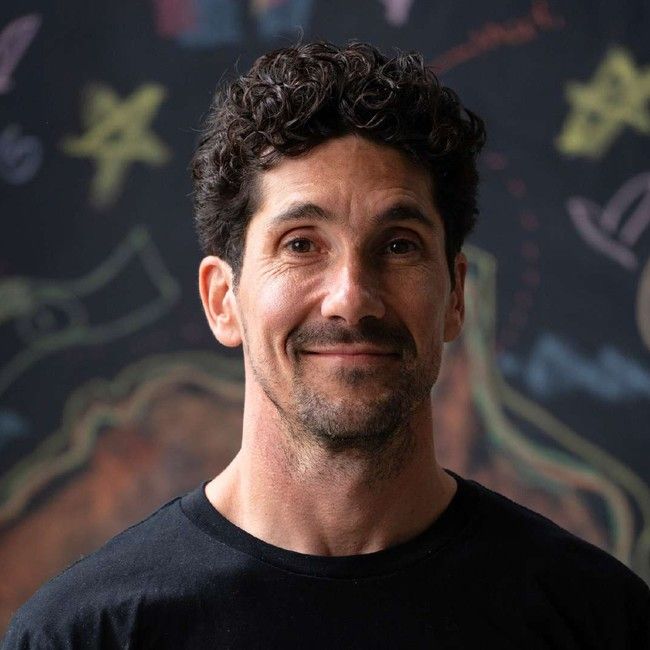
From the inside, disruption doesn't feel like disruption. It feels like a series of reasonable decisions. Gus Balbontin was making them at Lonely Planet.
Lonely Planet Watched Its Market Disappear. Gus Balbontin Was in the Building.
Most disruption keynotes are delivered by people who watched it from outside. Gus Balbontin was Chief Technology Officer and one of three executive directors at Lonely Planet while the internet dismantled the economics of the printed guidebook. The useful part of his account is not what happened. It is that from inside, it did not feel like disruption. It felt like a series of reasonable decisions.
Who is Gus Balbontin?
Balbontin grew up in Patagonia, arrived in Australia at seventeen on a scholarship, and by twenty-two had dropped out of university, hitchhiked across South America and landed a designer role at Lonely Planet despite having no relevant experience.
What followed was eight roles inside the company, an MBA, and a rise to CTO and one of three executive directors. Along the way he launched e-books and apps, worked with Google X, Nokia, Apple and Amazon on emerging technology, and lifted membership in the oldest travel forum on the internet by 50%.
He is now based in Melbourne as an investor, founder and advisor. He runs a design and innovation studio called Roshambo, sits as Entrepreneur in Residence at Victoria University, and spends his time building robots, developing AI tools, making 3D printed wheelchairs and backing climate technology.
What actually happened at Lonely Planet?
The product was a physical object containing information, and the internet made that information free, instant and updateable. Every advantage the guidebook had, other than being readable on a bus without reception, evaporated inside about a decade.
Balbontin's own framing puts it in the wider context, and this is the part Australian audiences underestimate: from the late 1990s onward, television, music, film, newspapers, magazines and book publishing all went through a level of disruption not seen since the industrial revolution. Media was simply the first industry to get it.
That matters because most sectors now facing AI, platform competition or regulatory upheaval are about fifteen years behind the same curve. The media industry has already run the experiment, in public, with real companies and real people, and the results are documented.
Why is an insider account more useful than a futurist's?
Because a futurist tells you what is coming and an insider tells you why you will not act on it.
This is the genuinely valuable content and it is uncomfortable. Organisations do not miss disruption because they cannot see it. Lonely Planet had the internet in the building. It had digital products, apps, forums and partnerships with the largest technology companies on earth. What it also had, like every incumbent, was a profitable existing business, staff whose expertise was in that business, customers who preferred it, and a series of quarterly decisions that each looked entirely sensible.
Every one of those reasonable decisions is where the failure lives. That is a much harder subject than "embrace change", and it is far more useful to a room of executives who already know change is coming and are wondering why their own organisation keeps not moving.
Ask for that. A session on how disruption looks from the inside, at the time, before anyone calls it disruption, is a different and better session than the standard case study retrospective.
What does he do now, and why does it matter?
It matters because the material stays current. A speaker whose case study ended a decade ago is describing history. Balbontin's day job involves building things, investing in early-stage companies, and advising through Victoria University on both large corporate problems and small business ones.
Practically, that means his AI and technology content comes from current work rather than from reading. For an Australian audience in 2026, where most rooms have already used the tools and are past being impressed by a demonstration, that difference is the whole thing.
It also affects the register. He is not a former executive reflecting on a career. He is someone who left corporate life deliberately and is now running the experiment at a smaller scale, which gives him licence to be blunt about what large organisations get wrong.
Which audiences suit him?
Conference openers, leadership and strategy events, and any organisation facing structural change rather than incremental improvement. He works particularly well for:
Traditional industries meeting digital competition. Retail, publishing, professional services, financial services, insurance, logistics.
Regulated sectors. Where the constraint is genuine but often used as an explanation for not moving.
Executive and board audiences. The material on why sensible decisions compound into strategic failure is a governance subject.
Technology and innovation conferences. Where the risk is an audience that already agrees, and a speaker who complicates the picture is more valuable than one who confirms it.
Less suited: sessions where you need practical skills transfer, and audiences looking for a step-by-step framework. This is a thinking session, not a toolkit.
The style is fast, funny and irreverent, which makes it a strong opener. It also means it needs a clean run at the room rather than a slot squeezed between two operational updates.
The most useful thing about this session is not the story of a famous brand meeting the internet. It is the account of what that looks like from the inside, made by someone who was making the decisions at the time.
Every organisation believes it would spot the thing coming. Almost none of them do, and the reason is not stupidity. Book this session to understand the actual mechanism.