What 30 Years of Body Language Research Says About Your Next Video Call
Video calls didn't kill body language. They cropped it at the collarbone, broke eye contact, and nobody was ever taught to compensate.
What 30 Years of Body Language Research Says About Your Next Video Call
Video calls did not make body language irrelevant. They amputated it. The frame cuts most people off somewhere around the collarbone, which removes hands, posture, distance and orientation from the conversation, and leaves an audience trying to read a face at a slight time delay. For Australian workplaces now running most internal meetings this way, that is a communication problem nobody has been trained for.
Who is Allan Pease?
Allan Pease has been known internationally as "Mr Body Language" for decades. Writing with Barbara Pease, he has produced 18 Top Ten bestsellers including 11 number ones, tran-slated into 54 languages and selling more than 30 million copies. The best known are The Definitive Book of Body Language, Why Men Don't Listen and Women Can't Read Maps, and The Answer.
He has spoken in more than 70 countries, is a Professor of Moscow State University, a Life Fellow of the Royal Society of Arts, and has been inducted into the Professional Speakers Association Hall of Fame.
The origin story matters more than the credentials for understanding what he actually delivers. Pease started in sales, selling door to door as a boy and later becoming a record-setting life insurance agent. The material came out of needing to read customers in real time, not out of a laboratory. That is why it lands with sales teams, and why it stays practical.
What did video calls actually change?
Five things, and most professionals have adjusted for none of them.
The frame removed your body. In person, an enormous amount of signal comes from hands, torso orientation, posture and how you occupy space. On a call, you are a head and shoulders in a rectangle. Gesture that reads as engaged in a room is either invisible or looks frantic on camera.
Eye contact became impossible. You look at the person on your screen, which means you are not looking at the camera, which means to them you appear to be looking slightly away. Everyone in the meeting is doing this to everyone else, permanently.
Mirroring broke. People unconsciously match each other's posture and rhythm when rapport is building, and it happens fast enough that even a few hundred milliseconds of latency disrupts it. Rapport still forms on video, but it forms more slowly and with more effort.
You can see yourself. No in-person conversation in human history involved watching your own face while you spoke. It is a genuinely novel condition and it changes how people behave, generally making them more self-conscious and less natural.
Everyone appears the same size. In a boardroom, hierarchy is visible in seating, posture and who takes up space. In a grid of tiles, the chief executive and the graduate occupy identical rectangles. That flattens some things usefully and removes cues people were relying on without knowing it.
Why does this matter more for hybrid meetings than fully remote ones?
Because hybrid splits the room in two and only half of it can be read. The people physically present are exchanging the full range of signals with each other, unconsciously and continuously. The people on screen are receiving a fraction of it, and sending back even less.
The result is the thing every Australian organisation now recognises: remote attendees speak less, get interrupted more, and are agreed with less often. It is usually attributed to technology or personality. A good part of it is that the in-room group is running on cues the remote group cannot access.
That is a fixable problem, and the fixes are mostly behavioural rather than technical. Where a camera sits. Who is chairing and how they hand over. Whether the in-room group is looking at the screen or at each other. Whether everyone dials in individually when it matters, which flattens the asymmetry entirely.
This is the strongest version of a Pease session for a 2026 corporate audience, and it is worth requesting explicitly. The classic material on first impressions, handshakes and negotiation posture is excellent and still works. The video and hybrid material is the part your audience is living with every day and has never been taught.
Can a speaker actually read a room from the stage?
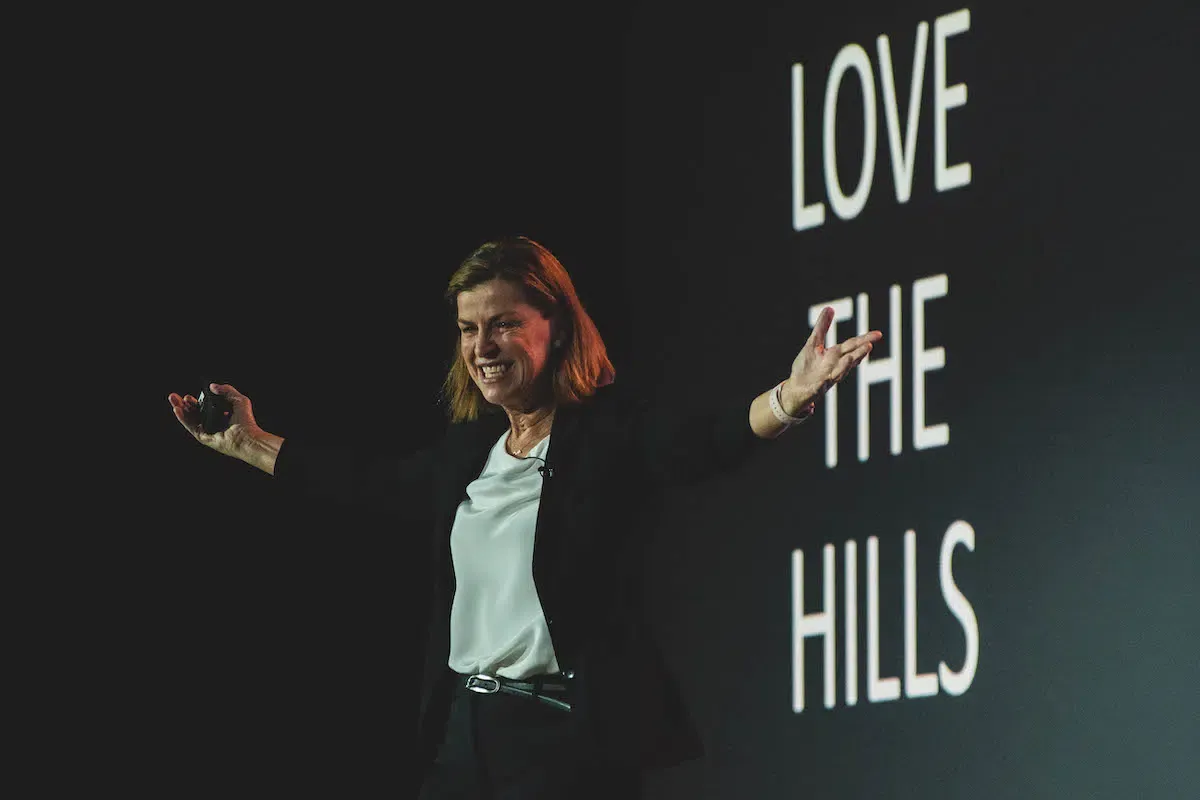
Yes, and it is one of the more useful things Pease demonstrates live. The observation in his own work is straightforward: an audience sitting back with chins down and arms folded is telling a presenter something, and a perceptive speaker changes approach while a less perceptive one keeps going regardless.
For an audience of managers, sales teams or anyone who presents, that skill is directly applicable. Not as a party trick, but as a feedback loop most presenters simply do not use. They deliver what they prepared, at the pace they prepared it, regardless of what the room is doing.
Sessions on this work best when they are demonstrated rather than described. Ask whether the format includes live audience work rather than slides about audience work. The difference is significant.
One honest note on what this material is and isn't
The genuinely useful version of body language work is about signals, impressions and rapport: how you come across, what a room is telling you, and how to adjust. That has practical value for anyone who sells, presents, negotiates or leads.
The version worth being careful with is lie detection. Popular interest in body language leans heavily toward spotting deception, and the research there is a good deal more contested than the popular treatment suggests. If your audience includes HR, investigators, or anyone who might act on a judgement about honesty, be deliberate about the framing in your brief.
Said plainly because it makes for a better booking: brief for influence and rapport, and you will get a session your audience uses next week. Brief for reading liars and you are setting up a different expectation than the material should carry.
What audiences suit this session?
Sales conferences, real estate and financial services teams, professional services firms, leadership programs, and any all-staff event where the goal is practical skills people can apply immediately. It also works well as a conference opener, because the format is fast, funny and participatory, which warms a room for everything that follows.
Less suited: highly technical audiences wanting research depth, and events where the primary aim is strategic rather than personal skill.
For Australian organisations with distributed teams across Sydney, Melbourne, Brisbane and Perth, the hybrid communication angle is the most immediately valuable. Say so when you enquire.